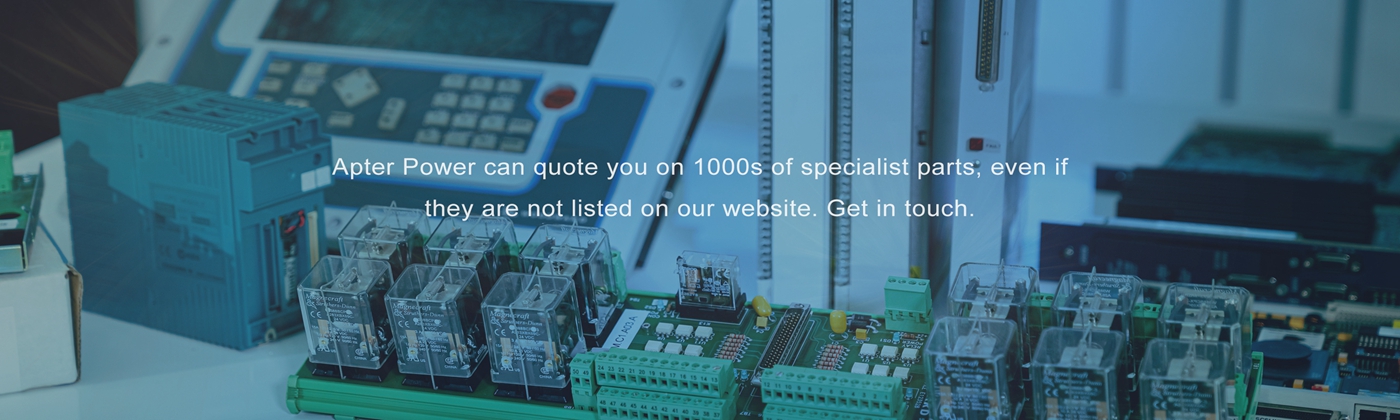
As global industrial automation continues to advance towards "high reliability, safety compliance and digital integration", Emerson Electric is driving the intelligent transformation of the power, energy and process industries with its two core platforms - Ovation DCS and DeltaV dual-channel redundant safety system (SIS).
Industry Development: From Control Systems to an Integrated "Safety + Intelligence" Platform
Currently, industrial enterprises are not only focused on production efficiency but also placing higher demands on system safety, continuity, and compliance. This is especially true in the oil, gas, power, and chemical industries, where any system outage or safety incident can lead to significant economic losses and risks.
Against this backdrop, DCS systems are exhibiting three major trends:
High Redundancy: Ensuring "Zero-Disruption Operation"
Safety System Convergence: Deep Integration of Control and Safety (SIS)
Data-Driven Decision Making: Real-time Data Supporting Intelligent Operation and Maintenance
Emerson has built a complete solution system covering control and safety through its Ovation and DeltaV dual platforms.
Ovation System DCS Card: A Core Control Platform for the Power and Process Industries
System Positioning and Architectural Advantages
Ovation DCS is a distributed control system specifically designed for the power and large-scale process industries, widely used in power generation, water treatment, and heavy industry. It adopts a layered architecture (field layer, control layer, operation layer, enterprise layer) to achieve comprehensive integration from data acquisition to enterprise management.
Simultaneously, the system supports controller redundancy and network redundancy to ensure the continuity of critical production processes.
Product Advantages (DCS Card and System Level)
High-Reliability Redundant Control: Supports hot standby redundant controllers to avoid single points of failure.
Industry-Specific Algorithm Library: Built-in control models for boilers, steam turbines, etc., reducing engineering complexity.
Strong Data Management Capabilities: Integrates historical databases and event logs to improve traceability.
Globally Mature Applications: Widely deployed in power systems in over 50 countries, with an installed capacity exceeding 650GW.
Especially Suitable for: Thermal power, hydropower, nuclear power, and large-scale energy projects.
DeltaV Dual-Channel Redundancy Safety System (SIS): Achieving SIL3 Safety Integrity
System Overview
The DeltaV SIS is a safety instrumented system from Emerson designed for industries with high safety requirements. It supports a dual-channel redundancy architecture, ensuring the highest level of reliability in critical safety loops.
The system complies with IEC 61508 and IEC 61511 standards, achieving SIL3 safety integrity.
Core Technological Advantages
Full System Redundancy Design: Controller, power supply, network, and I/O are all redundant.
Dual-Channel Safety Architecture: Critical signals are processed via dual paths to improve fault tolerance.
Intelligent Logic Solver: Supports advanced functions such as voting logic and causal matrices.
Fast Response Mechanism: Automatically executes emergency stop (ESD) upon detecting hazardous conditions.
High Engineering Efficiency: Pre-engineered solutions reduce design and debugging time.
Brand Advantages: Emerson Builds Global Leadership in Automation
Emerson possesses significant brand advantages in the field of automation:
Deep Industry Experience
Over 60 years of experience in power and process control
Thousands of successful system applications worldwide
Dual-Platform Strategy
Ovation: Focused on power and energy
DeltaV: Covering process industries and high-end manufacturing
High Reliability and Safety Standards
Fully compliant with international safety standards (SIL, IEC)
Redundant architecture throughout the entire system lifecycle
Leading Digital Capabilities
Supporting real-time data analysis and intelligent operation and maintenance
Driving the convergence of IT and OT
With the deepening development of Industry 4.0 and energy transition, Emerson automation systems will exhibit the following trends:
Deep Integration of Control and Safety
Future DCS and SIS will be more tightly integrated, achieving unified platform management.
Higher-Level Redundancy Architecture
Evolving from dual-channel to multi-level redundancy, further improving system reliability.
AI and Predictive Maintenance
Combining data analytics to achieve fault warning and intelligent decision-making.
Cloud and Edge Computing Convergence
Achieving cross-factory and cross-regional data collaboration and optimization.
Conclusion
The combination of Ovation DCS and the DeltaV dual-channel redundant safety system not only demonstrates Emerson's technological depth in industrial automation but also represents the future development direction of industrial control systems—a highly reliable, highly secure, and intelligent integrated platform.
Against the backdrop of global industrial upgrading and energy structure transformation, this solution will continue to provide enterprises with stable, efficient, and future-oriented automation support.
Sales : 32D Guomao Building,No.388,Hubin south Road,Siming district,Xiamen city 361009,China
Call Us Now : +86 18106909650
Email : sales8@apterpower.com